ICICI Bank reported a 9.28 per cent increase in its consolidated net profit to Rs 14,755 crore for the March quarter of FY26, primarily driven by a nearly 90 per cent reduction in provisioning. The bank's executive director, Sandeep Batra, noted strong asset growth but expressed caution regarding the geopolitical situation in West Asia.

India's net oil import bill could rise by $56 billion to $64 billion annually assuming global crude averages $110 to $115 per barrel in FY27.

India's recurve and compound archers showcased their skills at the Asia Cup World Ranking Tournament Stage 1, securing top qualification spots in multiple events despite fielding a relatively inexperienced team.

The Indian rupee depreciated 16 paise to settle at a fresh lifetime low of 96.86 against the US dollar, marking its ninth consecutive session of decline, driven by elevated global crude prices and a strong dollar.

Remittances from West Asia in March rose sharply amid the conflict in the region, with industry insiders estimating inflows to be 20-30 per cent higher than what is usual in a month.

India's toll collection growth is projected to moderate to 5-7 per cent year-on-year in FY27, a 150-200 basis points reduction, primarily due to the economic impact of the West Asia conflict and a slowdown in commercial traffic, according to Crisil Ratings.

Indian benchmark indices Sensex and Nifty closed marginally lower due to profit-taking, following the Reserve Bank of India's decision to keep the repo rate unchanged while lowering its growth expectations for the current fiscal year and forecasting higher inflation.

Indian equity markets experienced a significant decline in early trade, with the BSE Sensex and NSE Nifty dropping, as escalating geopolitical tensions in West Asia and a surge in global oil prices dampened investor sentiment. Track Sensex, Nifty50 movement and key market drivers for May 8, 2026.

Petrol and diesel prices in India have been increased by Rs 3 per litre each, marking the first rate hike in over four years. This decision follows a period of stable prices during recent state elections, despite rising global crude oil prices and significant losses for fuel retailers.

The National Payments Corporation of India (NPCI) is set to consider linking the ATM interchange fee to the Wholesale Price Index (WPI), alongside a potential hike from the current 19 to 21-22, which could impact customer charges for transactions beyond the free limit.

'Mark Mobius's life was dedicated to investing.'

Indian stock markets are set to be influenced by developments in US-Iran negotiations, crude oil prices, and foreign investor activity in the upcoming holiday-shortened week, according to market analysts.

The Indian government is considering additional relief packages for vulnerable sectors like MSMEs to mitigate the impact of the ongoing West Asia crisis on the economy and inflation.

India on Tuesday expressed deep concern over the escalating conflict in Iran and the Gulf region, urging all sides to exercise restraint and prioritise civilian safety.

The Rajya Sabha witnessed a heated debate between the opposition and the government regarding a discussion on the West Asia crisis, with accusations of political maneuvering and failure to uphold the dignity of parliamentary positions.

India's compound archers, led by Rajat Chauhan and Chikitha Taniparthi, dominated the Asia Cup World Ranking Tournament, while the recurve team faced disappointment.

An Indian national has been killed in Kuwait following Iranian strikes on a power and water desalination plant, bringing the total number of Indian fatalities in the West Asia conflict to eight.

The International Olympic Committee mourns the death of veteran Indian sports administrator Randhir Singh, recognising his significant contributions to the Olympic Movement.

Left-arm spinner Manav Suthar excelling on his Test debut is a testament to the robust structure that BCCI has created for talent identification, India batting coach Sitanshu Kotak said on Monday after the home team trounced Afghanistan inside three days in Mullanpur.

A new report from the Stockholm International Peace Research Institute (SIPRI) indicates that India has expanded its nuclear arsenal and is developing long-range weapons capable of reaching targets across China, while also maintaining focus on its rivalry with Pakistan.
Indian benchmark indices Sensex and Nifty traded lower amid volatile trends, influenced by escalating geopolitical uncertainties in West Asia and fresh outflows from Foreign Institutional Investors (FIIs).

Analysts predict that developments in West Asia and their impact on crude oil prices will heavily influence investor sentiment in the upcoming week. Global market trends, foreign investor activity, and rupee-dollar movement will also play a role.

'I'm sure looking at how he has captained in the last few years for his franchise, he's going to have a good time.'

India has significantly reduced Aviation Turbine Fuel (ATF) prices for international airlines by 27% due to easing global fuel benchmarks, while simultaneously increasing commercial LPG and 5-kg cylinder prices to record highs.

Deportations of Indians have increased in recent years from several countries like the UAE, USA, Malaysia, Myanmar.

Airfares to Southeast Asia have surged 25 to 30 per cent, driven by high demand and limited airline seat capacity.

India's procurement of Venezuelan crude oil has picked up momentum since April and the South American nation has already emerged as the third largest oil supplier to the country.

Kerala is facing increased inflationary pressure due to recent hikes in petrol and diesel prices, according to Chief Minister V D Satheesan. The state's economy is also impacted by the decline in remittances from the Gulf and higher oil prices.

Flex fuel motorcycles can deliver "3 per cent higher torque and 7 per cent higher peak power".

Civil Aviation Minister K Rammohan Naidu announced that public sector oil marketing companies will implement a partial and staggered increase in jet fuel prices for domestic airlines, aiming to protect passengers from steep fare hikes.

Venezuela's Interim President Delcy Rodriguez is in New Delhi on her sixth visit to India.

Foreign Portfolio Investors (FPIs) have withdrawn Rs 19,837 crore from Indian equities in the first two trading sessions of April, extending a significant selling trend from March, driven by geopolitical uncertainty, rising crude oil prices, and a depreciating rupee.

India's economy registered a robust 7.7 per cent growth in the fiscal year 2025-26, an increase from 7.1 per cent in the previous year, with the January-March quarter alone seeing a 7.8 per cent expansion.
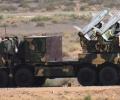
Indian defence stocks have seen an average year-on-year gain of 67 per cent, driven by renewed interest following 'Operation Sindoor' and a broader increase in global geopolitical tensions, with the combined market capitalisation of 18 firms increasing by approximately 2.3 trillion.

India's wholesale price inflation surged to 8.30 per cent in April, up from 3.88 per cent in March, primarily driven by a significant increase in the prices of fuel, power, and crude petroleum, according to data from the commerce and industry ministry.

Indian benchmark indices, Sensex and Nifty, closed marginally higher after a volatile trading session, driven by value buying in IT and select blue-chip counters, despite global crude price hikes and a weak rupee.

Amid rising tensions in West Asia, China is urging all parties to cease military operations, following Trump's appeal for help in securing the Strait of Hormuz.

Amidst a sharp run-up in gold and silver prices, investors are advised to rebalance their portfolios by booking partial profits in precious metals and reallocating to domestic equities and debt, according to financial experts.

'PM Modi is trying to reduce the volume of fuel consumed instead of raising prices sharply.'

India's leading passenger vehicle manufacturers are significantly increasing investments and factory capacities, alongside planning major product launches for FY27, driven by strong confidence in sustained domestic demand growth despite global geopolitical tensions and supply chain risks.
 © 2026 Rediff.com - Advertise with us - Disclaimer - Privacy Policy - Sitemap - Feedback - About us - Terms of use - Grievances